Signature Malaysia

Guide For Home Owners & Contractors: Home Renovation Permits & Paperwork In Malaysia

Key takeaways

  • Not all renovation work requires a permit, as the trigger is scope, not cost or size, and structural changes, extensions, and external alterations are the most common.
  • There are three approval layers, management approval, council permit, and professional sign-off, and which applies depends on your property type and scope.
  • The correct order is always management approval first, then council permit, as skipping or reversing this can delay or complicate approval.
  • Unapproved renovation works create complications at the point of resale, refinancing, or valuation that are harder and more expensive to resolve than getting the permit first.
  • Keep your renovation documents, including approved drawings, contractor agreement, variation orders, and receipts, with your title documents, as a buyer’s solicitor or bank valuer may ask for them.

Introduction

Most Malaysian homeowners plan tiles and finishes first and discover the approval requirements only after a contractor has quoted or work has started. That is the wrong order, and by then the options available to fix it are narrower and more expensive than they would have been at the start.

Skip the approvals and three consequences follow: a stop-work order while walls are open and materials are on site, fines from the local council under Act 133, and complications at resale or refinancing that are harder to resolve than the permit would have been. None of these are rare. All of them are avoidable.

This guide covers what triggers a permit, the three approval layers and how they differ by property type, how to apply, what documents to prepare, what happens without a permit, how paperwork affects your property’s valuation, what to keep after the project ends, and the mistakes homeowners most commonly make before work starts.

What renovation work requires a permit in Malaysia?

Floor plan, measuring tape and renovation tools on a workbench at an unfinished renovation site in MalaysiaFloor plan and renovation tools on a workbench at an unfinished renovation site.

Not all renovation work requires a permit, but the trigger is scope, not cost or size.

  • Work that triggers approval: structural changes (hacking, removing or adding walls, touching load-bearing elements), extensions (adding covered area or built-up space), external alterations (facade, porch roofing, awnings with fixed structure, balcony enclosure), plumbing or drainage changes that connect to public infrastructure, and major rewiring or electrical load changes.
  • Work that is typically exempt: painting and wallpapering, flooring replacement (tiles, timber, vinyl), fixture swaps (toilet, sink, tap, light fitting), and non-structural internal partitioning using glass or gypsum board. Confirm with your local council before assuming exemption, as requirements vary between authorities.
  • Strata properties: even exempt work may require management notification or approval before a contractor enters the building. See the approval layers section below for the full breakdown by property type.

The right question is not “does my renovation need a permit?” The right question is “which approval applies to this exact scope at this exact address?”

For more on electrical load changes in renovation, read: Single Phase vs 3 Phase Power: What Home Owners Need to Know.
What approval layers apply to a renovation in Malaysia?

There are three approval layers, and which applies depends on your property type and the scope of work.

Property typeManagement approvalCouncil permitProfessional sign-off
Condominium or apartmentRequired (Joint Management Body or Management Corporation)Required for structural and external worksRequired for drawings submission
Gated-and-guarded landed (if strata titled)Required (JMB or MC)Required for structural and external worksRequired for drawings submission
Terrace house, semi-D, bungalow (individual title)Not requiredRequired for structural and external worksRequired for drawings submission
All property types, cosmetic works onlyNotification may be required for strataNot requiredNot required

Layer 1: Management approval (JMB or MC)

  • Applies to all strata properties: condominiums, apartments, serviced residences, and gated-and-guarded landed developments. Governed by the Strata Management Act 2013.
  • Required before any renovation work begins, including work that does not need a council permit.
  • Typical requirements: renovation form, floor plan, scope of works, contractor Construction Industry Development Board (CIDB) registration, refundable deposit, and agreement to working hours.
  • Signature Malaysia‘s Reno Works team liaises with building management on your behalf to secure this approval before work begins.

For condo renovation rules, read: Guide to Condo Renovation Rules in Malaysia.

Layer 2: Council permit

  • Issued by your local authority: DBKL in Kuala Lumpur, MBPJ in Petaling Jaya, MPAJ in Ampang, and their equivalents elsewhere.
  • Grounded in Section 70 of the Street, Drainage and Building Act 1974 (Act 133): no building may be erected or altered without prior written permission from the local authority.
  • Local councils across multiple states including Selangor now accept submissions via OSC 3.0 Plus, a digital system managed by KPKT. Confirm with your local authority before applying.

Layer 3: Professional sign-off

  • Required when drawings must be prepared and submitted to the council.
  • A registered Building Draughtsman or Architect under Lembaga Arkitek Malaysia (LAM) for standard extensions; a Professional Engineer under the Board of Engineers Malaysia (BEM) for structural calculations.
  • The homeowner appoints the professional; the professional submits to the council.

For the full permit process for a landed property, read: Guide to Landed Home Renovation in Malaysia: Strata vs. Individual Title.

How do you apply for a renovation permit in Malaysia?

The application process differs by property type and council, but the correct order is always the same.

  • Step 1: Identify which local authority covers your property. Rules, checklists, and fees differ between DBKL, MBPJ, MBJB, and other councils.
  • Step 2 for strata: Submit the renovation application to your JMB or MC first. Do not approach the council before written management approval is received.
  • Step 2 for landed with structural or external works: Appoint a registered architect, building draughtsman, or engineer to prepare drawings and submit to the council.
  • Step 3: Confirm your contractor holds a valid CIDB registration before submitting any application. Most council submissions require it.
  • Step 4: Build approval time into your renovation schedule. Timelines vary by management office and council. Confirm directly before fixing a contractor start date.
  • For contractors: Confirm approval requirements with the homeowner before quoting. Include drawings, submission fees, and approval timelines in the quotation.

For CIDB licence requirements, read: CIDB Licence Malaysia Guide: A Must-Have for Renovation Contractors.

What documents do you need for a renovation permit?

The documents required depend on the approval layer, but a core set applies across all types.

  • Proof of ownership (title deed or SPA).
  • Floor plan or layout drawing showing the scope: hacking, new walls, plumbing, electrical points, wet areas, and any external changes. Drawings typically use red for new works and blue for demolition works.
  • Scope of works description, itemised where possible.
  • Contractor details: company name, Suruhanjaya Syarikat Malaysia (SSM) registration, and CIDB licence number.
  • Refundable deposit for management applications (amount set by the JMB or MC).
  • For council submissions: completed application form, engineering endorsement where structural work is involved.
  • For strata properties: written management approval letter before any other submission.

What renovation paperwork do you need from your contractor?

Beyond the permit documents, three pieces of contractor paperwork protect you throughout the renovation.

  • Bill of Quantities (BOQ): An itemised breakdown of every work item, material, quantity, and cost. It creates a legal record of what was agreed and makes quotations comparable across contractors.
  • Renovation contract: Covers scope of works, payment schedule tied to milestones, project timeline, variation order process, Defect Liability Period, and dispute resolution. A verbal agreement is not a contract.
  • Payment schedule: Staged payments tied to completed milestones, not calendar dates. A large upfront payment with no milestones is a risk.

For contractor hiring guidance, read: Complete Guide to Hiring a House Renovation Contractor.

What happens if you renovate without a permit?

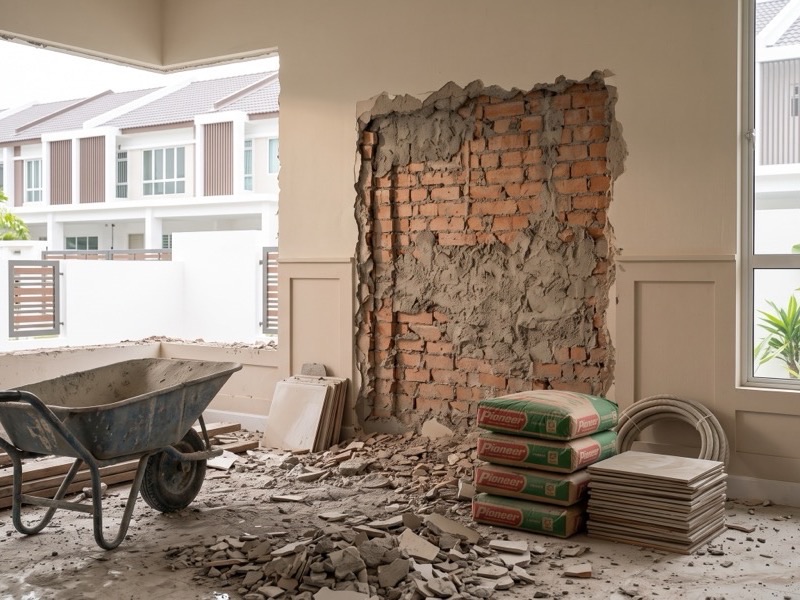
Malaysian home interior mid-renovation with a hacked brick wall and building materials left on the floorHome interior mid-renovation with a hacked wall and materials left on the floor.

Renovating without the required approval is an offence under Malaysian law and carries real financial and legal consequences.
  • Stop-work order issued mid-project, leaving walls open, materials on site, and the contractor already paid.
  • Fines from the local council under Act 133. Councils can escalate non-compliance to court.
  • Compulsory demolition of unapproved works at the owner’s cost.
  • Insurance risk: houseowner policies may not cover damage that occurs in areas where works were unpermitted. Confirm with your insurer before starting.

How does a renovation permit affect home valuation and resale?

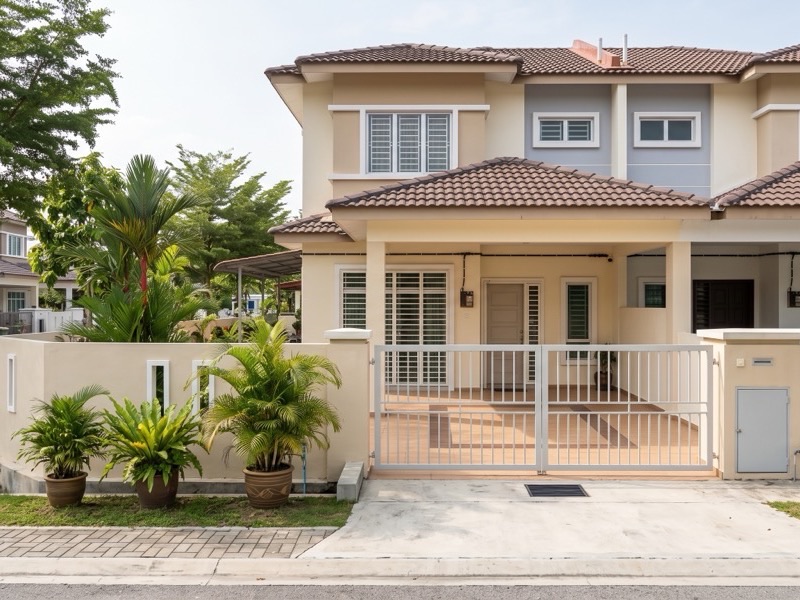
Exterior of a completed Malaysian semi-D home with a gate and drivewayExterior of a completed Malaysian semi-D home with a gate and driveway.

Unapproved renovation works create complications at the point of sale, refinancing, or valuation that are harder and more expensive to resolve than getting the permit first.

  • A valuer may exclude an unapproved addition or extension from the official built-up area, reducing the assessed value. Valuation practice varies. Confirm with a registered valuer.
  • A bank may decline to finance a buyer’s purchase if the property carries unapproved structural additions.
  • Local authorities can require demolition of unapproved works even after the property has changed hands.
  • The Certificate of Completion and Compliance (CCC) is required for new structures added to the permanent building. Without it, the addition has no legal recognition as a completed building.

For full CCC guidance, read: Certificate of Completion and Compliance (CCC): What Home Owners Need To Know For Renovations.

What paperwork should you keep after your renovation?

Renovation documents do not expire in usefulness; keep them for compliance, disputes, insurance claims, and resale. Store all of the following with your property title documents, as a buyer’s solicitor or bank valuer may request them.

  • Council permit and approved drawings stamped by the local authority.
  • Management approval letter and deposit refund receipt.
  • Contractor agreement and full BOQ.
  • All variation orders signed by both parties.
  • Payment receipts tied to milestones.
  • Photos taken before, during, and after the renovation.
  • Defect liability correspondence and sign-off.

What are the common renovation permit mistakes homeowners make?

Most permit mistakes are made before work starts, not during.

  • Assuming landed property means no approval is needed.
  • Starting work before written management approval is received.
  • Letting the contractor handle all paperwork without confirming in writing what was submitted and to whom.
  • Treating the council permit and management approval as the same thing. They are separate layers, issued by different bodies.
  • Not retaining copies of approved documents after the project ends.
  • Choosing the cheapest quotation without checking whether approval fees, drawings, and submissions are included.

Frequently asked questions about renovation permits

Is a renovation permit the same as JMB or MC approval?

No. A council permit is issued by your local authority under Act 133 and covers structural or external works. JMB or MC approval is issued by your building’s management body under the Strata Management Act 2013 and applies only to strata properties. Both may be required depending on your property type and scope.

Timelines are not fixed by law and vary by council and management office. Confirm directly with your local authority and building management before fixing a contractor start date.

Yes. Council-issued renovation permits typically have a validity period. Confirm the validity period with your local authority when the permit is issued and plan your timeline accordingly.

For management approval, yes. For council submissions that require drawings, a registered architect, building draughtsman, or engineer must prepare and submit them on your behalf.

No. Starting works before council approval is an offence under Malaysian law and can result in a stop-work order, fines, or compulsory demolition. Council approval must be in writing before any work begins.

Conclusion

The paperwork side of a renovation is not optional admin. Knowing which approval applies before work starts protects you legally, financially, and at resale. It is harder to resolve after the fact than before.

Signature Malaysia‘s design consultants work within your property’s approval requirements from the design stage, whatever the property type. Signature Reno Works coordinates the renovation including liaison with building management to secure whichever approvals apply. Speak to the team before finalising your renovation plans.