Signature Malaysia

Wainscoting Design Ideas For Your Home

Key takeaways

  • Wainscoting is panelling fixed to the lower part of a wall, or the full height, giving a flat wall a physical surface rather than a painted one.
  • Six panel styles suit different rooms and interiors, from raised panel for a classic look to board and batten for a bold modern grid.
  • In Malaysia’s humid climate, material choice and wall dryness decide whether wainscoting lasts or warps.
  • Wainscoting works best on walls people pass or touch daily: living rooms, dining areas, staircases, and bedroom headboard walls.
  • Signature Malaysia builds wall panelling with wainscoting design, paired with rattan-inspired textures and artisanal motifs in its Anggun Heritage collection.

Introduction

Wainscoting began as a practical wall treatment, used to protect walls from moisture and everyday wear before it became a decorative feature. Today it’s chosen mainly for the proportion and detail it adds, though it still protects the wall it covers.

Interest in wainscoting is rising in Malaysian homes, from condos to landed properties, as more homeowners look for a way to add texture and structure to a plain wall. But Malaysia’s humidity changes how it should be specified here. A wall treatment designed for drier climates needs the right material and preparation to hold up in a tropical one.

This guide covers what wainscoting is, six panel styles, room-by-room ideas, materials suited to Malaysia’s climate, how to plan height and layout, and the mistakes that shorten its life.

For more on styling a feature wall, read: Wall Decor Ideas for Different Parts of Your Home.

What is wainscoting?

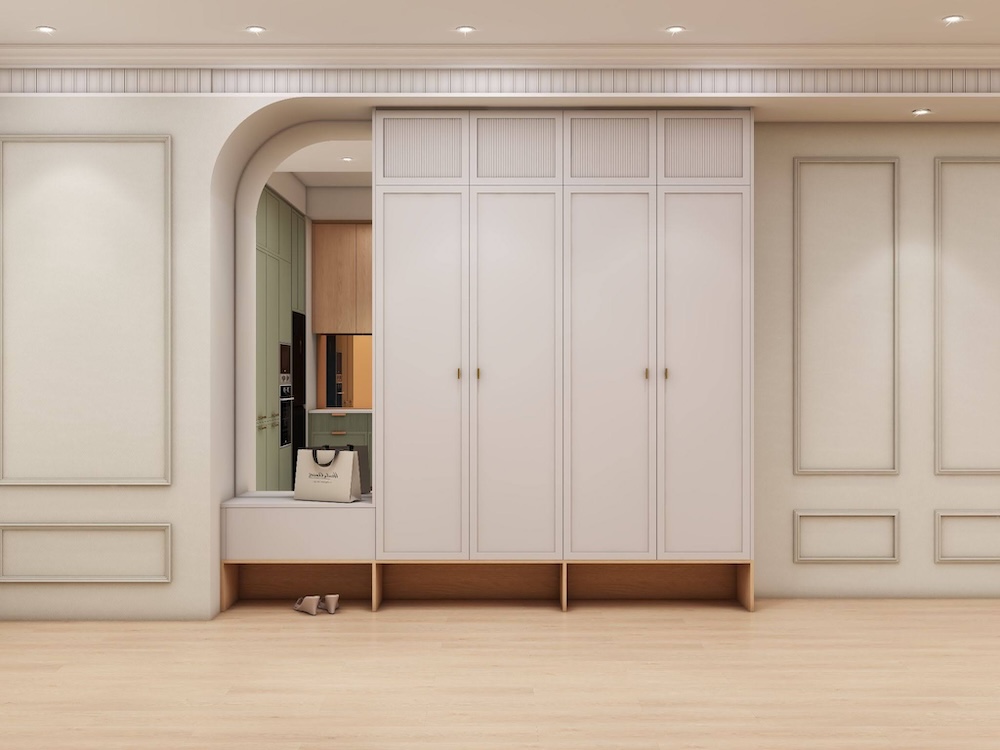
Decorative wainscoting panels integrated into a modern interior wall.Decorative wainscoting panels integrated into a modern interior wall.

Wainscoting is decorative panelling applied to the lower part of a wall, though it can run to full height, adding texture, proportion, and architectural detail.

It began as a practical treatment, protecting walls from moisture and knocks before it evolved into the decorative feature it’s used as today. A wainscoting installation typically has a few consistent parts: the panels themselves, vertical or horizontal rails, a top rail or chair rail marking where the panelling ends, and skirting at the base.

Half-height wainscoting stops partway up the wall, the traditional approach and still the most common. Full-height panelling runs floor to ceiling, and makes far more of the wall. Either way, it differs from paint or wallpaper in one key sense: it’s a physical, dimensional surface, not a flat finish.

What sits around the panelling changes how it looks. Signature’s Anggun Heritage collection pairs wall panelling with rattan-inspired textures and artisanal motifs, so the detailing sits in a Malaysian context rather than an imported one.
What are the wainscoting design styles?

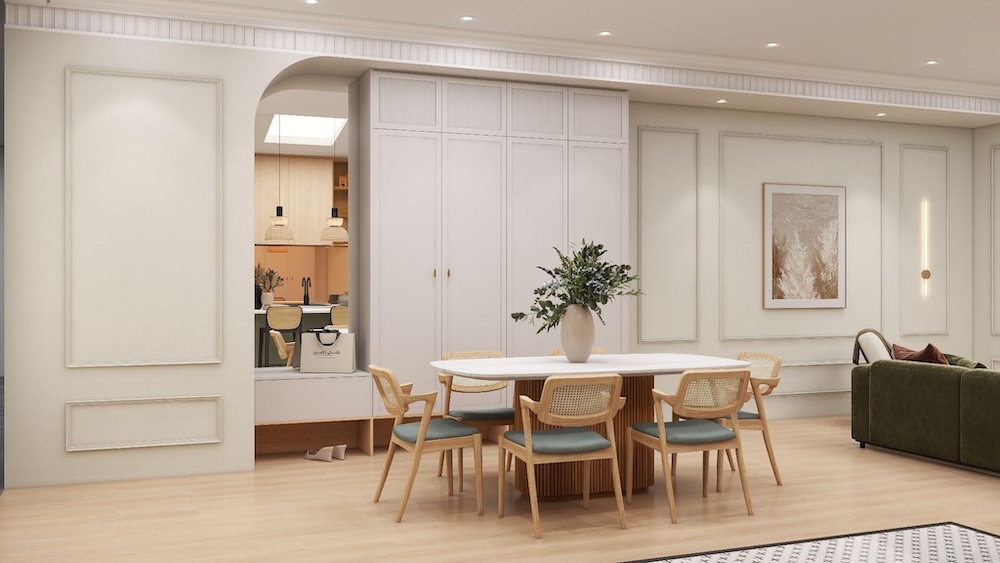
Dining area with picture frame wainscoting on the surrounding walls.

The right style depends on the room, the ceiling height, and whether the interior leans modern or classic.

For how panelled feature walls fit into a broader interior style, read: Modern Contemporary Interior Design Ideas.
Raised panel

Panels that stand out from the frame, edged with bevelled moulding.

  • Look: The classic choice for formal and heritage interiors.
  • Tip: Can feel heavy in a small room, better suited to more generous proportions.

Flat (recessed) panel

Clean, recessed panels with simple, understated lines.

  • Look: The go-to for a modern take in contemporary Malaysian interiors.
  • Tip: The most versatile of the styles here, and the safest choice if you’re unsure.

Beadboard

Narrow vertical planks joined with visible grooves.

  • Look: Suits cottage, coastal, and casual interiors.
  • Tip: Adds texture without the heavier moulding of a raised panel.

Board and batten

Vertical battens fixed over a flat base, forming a bold grid.

  • Look: Suits modern farmhouse styling and feature walls.
  • Tip: Scales particularly well on taller walls.

Picture frame moulding

Separate strips of moulding arranged into frame shapes directly on the wall.

  • Look: A lighter, more budget-flexible look than full panelling.
  • Tip: The easiest to add to a finished wall, since the moulding fixes straight onto the existing paint.

Shadow box

Framed box sections built out from the wall for visible depth.

  • Look: A refined, classic accent.
  • Tip: Works best as a feature on a single wall rather than throughout a room.

Wainscoting ideas by room

Wainscoting works best on walls that get daily contact, from living and dining areas to staircases and hallways.

Living room feature walls

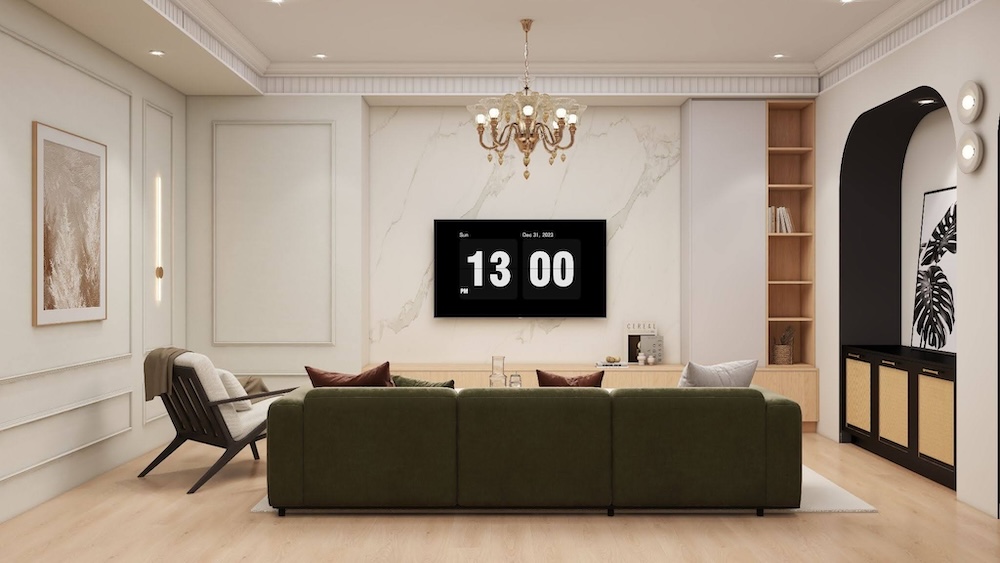
Living room with wainscoting beside a TV feature wall.Living room with wainscoting beside a TV feature wall.

Wainscoting anchors the seating zone and frames a TV feature wall.
  • Where it works: Behind or beside the TV wall, paired with built-in cabinetry so the panelling and the joinery match.
  • Tip: A two-tone treatment, panelling in one shade and the wall above in another, adds depth.

Dining room

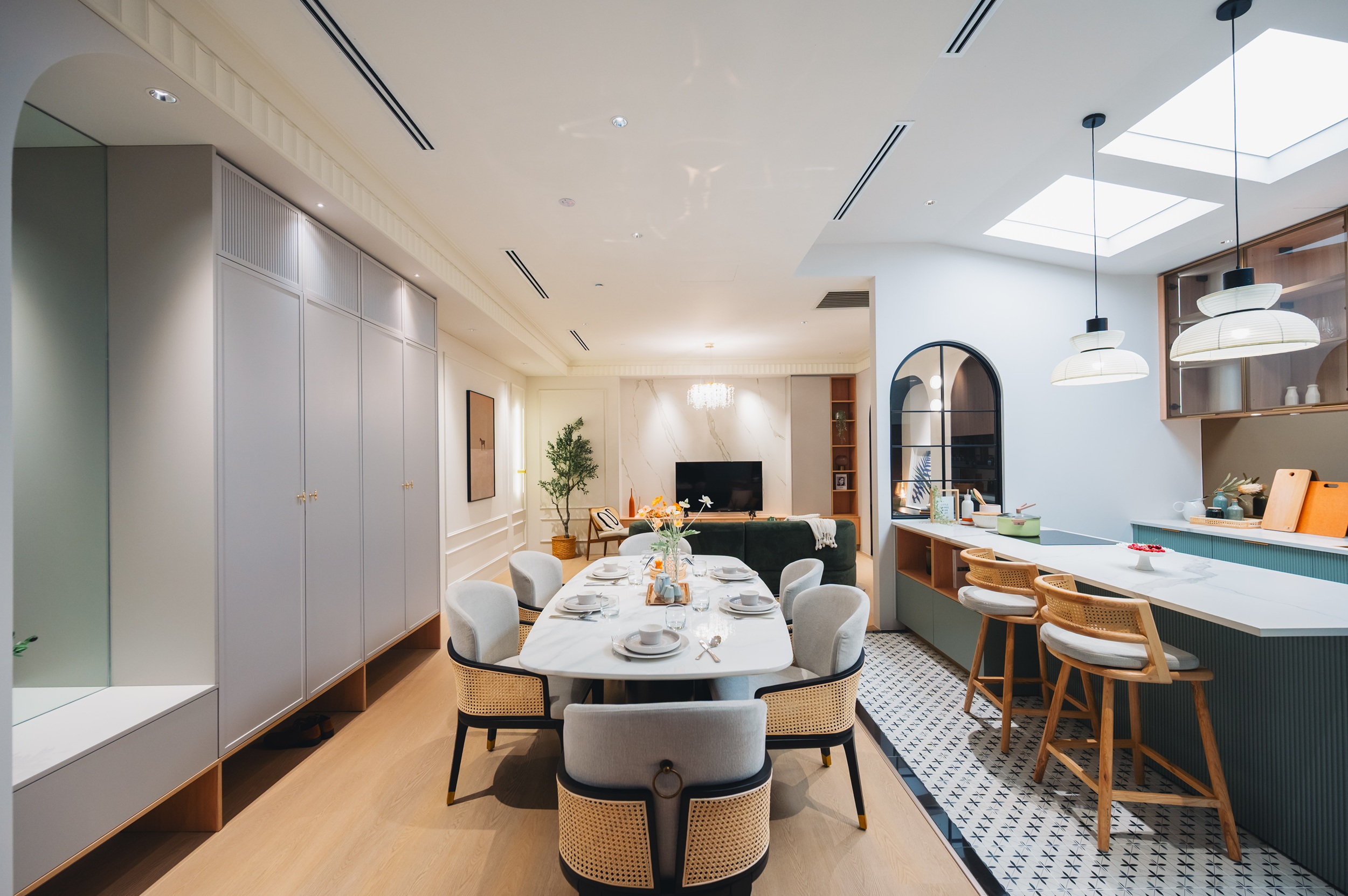
Dining room with decorative wainscoting along the wall.

Wainscoting adds a refined backdrop to the dining zone.
  • Where it works: Along the wall the dining table sits against, where chairs make contact daily.
  • Tip: Keep it tone-on-tone and hang a mirror or artwork above the panelling.

Staircase and hallway

Wainscoting follows the line of the stair and protects a wall that takes daily contact.

  • Where it works: Along the stair and down a long corridor, where the repeating panels break up a blank wall.
  • Tip: Keep the panel spacing consistent with the steps, so the panelling follows the same rhythm as the stair.

For staircase railing, tile, and lighting ideas, read: Under Staircase Design Inspiration & Ideas You’ll Love.

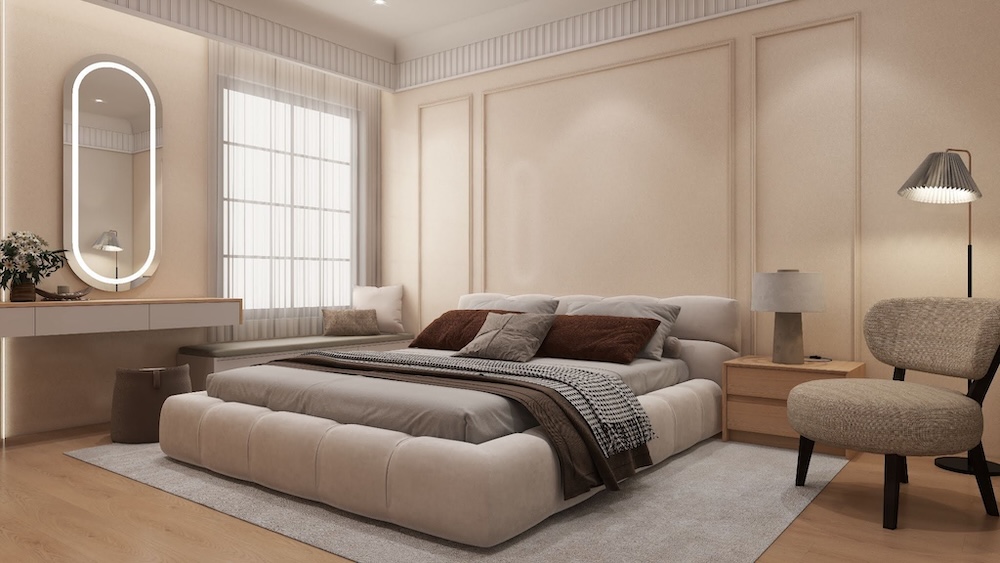
Bedroom headboard wall

Bedroom with full-height wainscoting framing the headboard wall.Bedroom with full-height wainscoting framing the headboard wall.

Wainscoting frames the bed and creates a restful focal point.

  • Where it works: The headboard wall, run full height so it frames the bed rather than cutting across it.
  • Tip: Concealed lighting behind the panelling lifts the wall at night.

Wainscoting materials for Malaysia's climate

Wainscoting in Malaysia comes down to two things: the material you choose, and whether the wall behind it is dry.

  • Solid wood: Classic, but the most sensitive to humidity if not properly sealed.
  • MDF: Common and cost-effective, but needs a moisture-resistant grade and full sealing before it goes on any damp-prone wall.
  • PVC or polymer panelling: The most tolerant of humidity, a practical choice for damp-prone walls.

A damp or rain-exposed wall is the real risk. Moisture trapped behind the panelling has nowhere to go, and it shows up months later as swelling at the joints and paint lifting at the edges. The wall has to be dry before anything goes on it, and the panel edges sealed properly once they do.

How should you plan wainscoting height, spacing, and layout?

Wainscoting looks right when its height and panel spacing suit the wall and ceiling, not a fixed rule copied from another home.

  • Decide half or full height: Half height usually sits at about a third of the wall, with the chair rail marking the top of the run. Full height runs floor to ceiling and suits taller rooms or a single feature wall.
  • Keep panel widths even: Align them with doors and windows rather than an arbitrary grid.
  • Match the profile to the height: A raised panel carries a half-height run. A flat panel or picture frame moulding suits full height, where a heavy profile would overwhelm the wall.
  • Plan around switches, sockets, and skirting: Mark their positions on the wall before the panel layout is set.
  • Confirm the wall is sound and dry: Check it before the panel layout is finalised, not on installation day.

What are the common wainscoting mistakes to avoid?

Most wainscoting problems trace back to skipping preparation, not choosing the wrong style.

  • Skipping a proper dryness test: A wall that looks dry is not the same as a wall that is dry. Check before anything goes on it.
  • Mismatching the finish: A panel tone that doesn’t match your existing cabinetry makes the two look like separate jobs.
  • Underestimating material: Order enough in one batch. A second order can arrive in a slightly different shade, and on a long wall you will see the join.
  • Treating it as a standalone decision: Plan it alongside electrical points and existing skirting, not after the fact.

FAQs about wainscoting

What is the difference between wainscoting and wall panelling?

Wall panelling is the broad term for any panelled wall treatment. Wainscoting is the version that runs along the lower part of the wall and stops at a rail, though the term now covers full-height panelling too. In practice, most people use both words for the same thing.

Yes, with the right material and preparation. PVC or polymer panelling handles humidity best. MDF works if it is a moisture-resistant grade and sealed on all edges before it goes up. Solid wood is the riskiest unless properly sealed. In every case, the wall behind has to be dry first, or the moisture is trapped where you cannot see it.

Half height usually sits at about a third of the wall, with the chair rail marking the top of the run. Full height runs floor to ceiling and suits taller rooms or a single feature wall. Measure your own ceiling and work from a third of that, rather than copying a figure from another home. A fixed number that suits a 3m room will look wrong in a condo.

Not necessarily. Half-height panelling in a light tone-on-tone finish adds proportion without closing the room in. Full-height panelling in a dark tone will close a small room in.

Living rooms, dining areas, staircases and hallways, and bedroom headboard walls. The common factor is a wall people pass or touch daily, where panelling protects the surface and gives the room a horizontal line to sit against.

Conclusion

The style follows the room and the interior it sits within. A raised panel suits a formal space, a flat panel suits a modern one, and board and batten scales best on a tall wall. But in Malaysia, none of that decides whether the panelling lasts.

Material choice and wall condition do. Specify a moisture-resistant grade, confirm the wall is dry before anything goes on it, and settle the height and panel spacing on a drawing rather than on site.

Signature Malaysia builds wall panelling with wainscoting design, with concealed lighting integrated at the joinery stage, as part of the Anggun Heritage collection. Speak to the team before starting your wainscoting project, or explore Anggun Heritage.

Our New Flagship Store is opening in September 2026. Stay tuned.