Key takeaways
When it comes to ceramic vs porcelain, both tiles look nearly identical in a showroom. Same finishes, same patterns, often placed side by side on the same shelf. But they perform very differently once installed, and choosing the wrong one for the wrong room is a mistake that shows up months later.
In Malaysia, the stakes are higher than most. High humidity year-round, wet kitchens built for daily wok cooking, outdoor balconies exposed to rain and UV, and a mix of condos and landed houses all demand tiles chosen for performance, not just appearance.
This guide covers the real differences, a room-by-room tile guide, cost comparisons, how to tell the two apart, and the most common buying mistakes to avoid.
The main difference between porcelain tiles vs ceramic tiles is water absorption. Porcelain absorbs far less moisture, making it significantly more durable in wet conditions.
Ceramic is made from coarser mixed clay fired at approximately 900°C–1,100°C, producing a lighter, more porous tile. In contrast, porcelain uses refined kaolin clay fired at temperatures exceeding 1,200°C, resulting in a dense tile with a water absorption rate below 0.5%.
While porcelain is technically a subtype of ceramic—which often leads to confusion—the performance gap is significant, especially in Malaysia’s humid climate and wet areas.
Here is how the two compare across the factors that matter most for a Malaysian home renovation:
| Factor | Ceramic | Porcelain | Winner | What this means |
|---|---|---|---|---|
| Clay type | Coarser mixed clay | Refined kaolin clay | Porcelain | Porcelain handles humidity better |
| Firing temperature | ~900°C–1,100°C | ~1,200°C and above | Porcelain | Higher temp produces denser tile |
| Water absorption | 3%–10% (varies by type) | Below 0.5% | Porcelain | Critical for wet kitchens and bathrooms |
| PEI wear rating | 1 to 3 | 4 to 5 | Porcelain | Malaysian kitchens need PEI 4 and above |
| Cost (approx.) | ~RM1.80 per piece (30x30cm) | ~RM2.00 per piece (30x30cm) | Ceramic | Porcelain labour costs more |
| Installation ease | Lighter, easier to cut | Needs specialist tools | Ceramic | Faster installation timeline |
| Best use areas | Walls, dry rooms, feature surfaces | Floors, wet areas, and outdoor | Contextual | Match to moisture exposure |
How to choose tiles for your home depends on the room, not just the look. Here is a practical room-by-room guide for Malaysian condos, terrace houses, and landed homes.

Tile choice in the living room depends on the surface. Floors and walls have different demands.
For floors, porcelain is the stronger choice. Large-format porcelain handles foot traffic well and mimics marble, timber, or concrete finishes convincingly. For walls and accent surfaces, ceramic tiles for living room feature walls and TV panel backdrops work well. Ceramic is lighter, easier to install, and available in a wider range of decorative finishes.
For open-plan Malaysian living spaces where natural light is strong, matte or semi-gloss finishes reduce glare and are easier to maintain.

Malaysian homes typically have a wet kitchen for heavy cooking and a dry kitchen for light prep. The tile choice should differ between them.
Wet kitchen floors require porcelain. Water, oil splashes, daily wok cooking, and heavy foot traffic make this non-negotiable. For dry kitchen floors and backsplashes, ceramic works well, offering more pattern and colour variety for expressive styling.
Read: 7 Wet Kitchen Design Ideas for a Stylish & Functional Home, Kitchen Remodelling: Things to Consider Before Renovating Your Kitchen.

Are ceramic tiles ok for a bathroom? Yes, but only on walls. The floor is a different matter.
Glazed ceramic works well on bathroom walls. It is easy to handle, easier to install, and offers more decorative finish options. For waterproof tiles for bathroom floors and shower areas, porcelain is the recommended choice. Its low water absorption rate makes it far more resistant to moisture than ceramic.
In Malaysia’s humid climate, poorly sealed ceramic on bathroom floors risks mould, especially in bathrooms with limited ventilation.
Also read: Small Bathroom & Toilet Design Ideas & Inspirations You’ll Love.

The bedroom is one of the few rooms where ceramic performs as well as porcelain in most cases.
For floors, ceramic works well. Moisture is not a concern in a standard bedroom, and the lower cost suits most homeowners. Many Malaysian bedrooms use timber laminate flooring, and ceramic tiles offer a more durable, easier-to-clean alternative. For feature walls, ceramic offers richer decorative patterns for a statement headboard wall.
If the bedroom connects directly to a wet bathroom or outdoor area, upgrade to porcelain for that floor zone to prevent moisture migration.
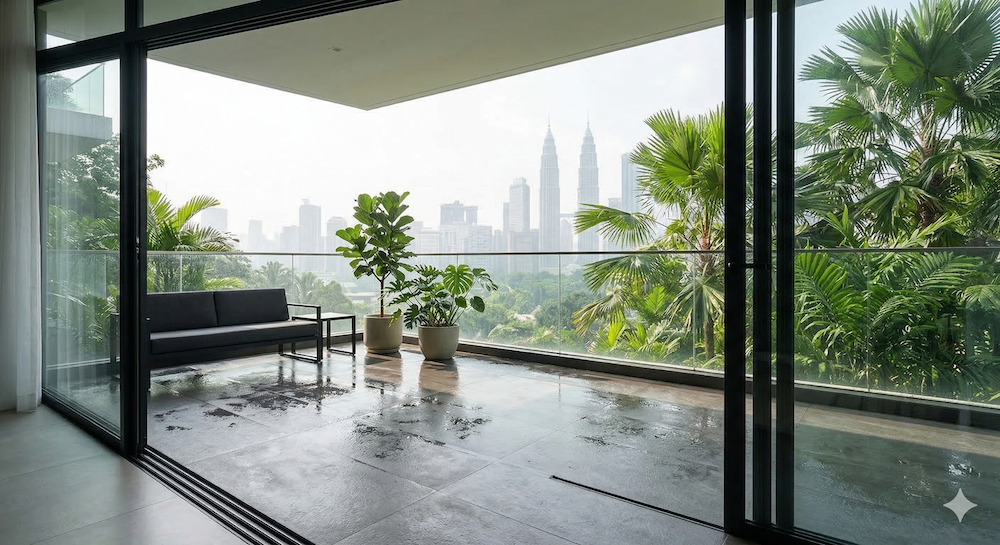
Can I use porcelain tiles on my balcony in Malaysia? Yes, and porcelain is the only practical choice for outdoor surfaces.
Balcony tiles must be porcelain. Ceramic cannot withstand Malaysia’s daily rain, UV exposure, and temperature fluctuation. It absorbs moisture, expands, and deteriorates quickly. For porcelain tiles for outdoor use, choose textured or anti-slip finishes rated for wet conditions. Large-format outdoor porcelain (600mm x 600mm or larger) minimises grout lines for a cleaner, more seamless finish.
These are the questions Malaysian homeowners ask most often when choosing between the two tile types.
Not always. It depends entirely on where the tile is being used.
Porcelain wins in wet areas, high-traffic floors, and outdoor zones. Ceramic holds its own on dry walls, decorative surfaces, and bedroom floors where moisture is not a factor.
Match the tile to the room, not the price tag.
Porcelain outlasts ceramic in high-traffic and wet areas. In dry, low-traffic rooms, both perform comparably over time.
Ceramic is generally the more affordable option per tile. Porcelain sits at a higher price point due to the denser material and specialist installation it requires. Installation costs vary depending on tile format, rectification, and labour rates; larger format and rectified tiles cost more.
The price gap widens at installation. Porcelain needs specialist cutting tools and a skilled tiler. Ceramic is faster to lay and easier to handle, which keeps labour costs lower.
Replacing a failed ceramic tile in a wet bathroom costs far more than the upfront price difference. Factor in the 10-year cost, not just the purchase price.
Check the packaging label first. For loose or already-installed tiles, use these three tests.
When buying tiles in Malaysia, look for the MS certification mark on the packaging. SIRIM QAS International certifies tiles against MS ISO 13006:2014, regulated by CIDB Malaysia.
Avoid these common mistakes when choosing between ceramic and porcelain.
Ceramic and porcelain each have a clear role. The right choice depends on the moisture level, foot traffic, and how the surface will be used.
Plan tile selection room by room. Porcelain for wet zones, high-traffic floors, and outdoor areas. Ceramic for dry walls, decorative surfaces, and bedrooms where moisture is not a factor.
Signature Malaysia‘s design consultants can guide tile and renovation decisions for every room, from material selection to full home interior planning. Explore Signature’s whole-house portfolio for real-world inspiration, or speak to our team to get started.
Limited to 50 slots only!