Signature Malaysia

Marble vs Quartz: Which Is Better for Kitchen Countertops in Malaysian Homes?

Key takeaways

  • Marble and quartz are both premium countertop materials, but they perform very differently once installed in a Malaysian kitchen.
  • Marble is a natural porous stone with a calcium carbonate base that stains and etches permanently from everyday Malaysian cooking ingredients, including curry, tamarind, and lime juice.
  • Quartz is an engineered stone made from 90 to 95 percent natural quartz bound with polymer resin. It is non-porous, requires no sealing, and holds up in wet kitchen conditions, with trivets used for hot cookware.
  • Between marble and quartz, quartz is the correct choice for wet kitchen countertops. Marble suits dry kitchen islands and vanity tops where use is lighter, and aesthetics are the priority.
  • Signature Malaysia offers the Signature Quartz Marblo series, including Statuario Venato, Bianco Gioia, Victoria, Orix, and Diablo, delivering marble-look aesthetics with quartz performance and a 10-year warranty.

Introduction

Both marble and quartz look premium in a showroom. The difference between them becomes apparent only after installation, once a Malaysian kitchen puts both materials under real conditions.

Malaysian kitchens are demanding. High-heat wok cooking, daily exposure to acidic ingredients including curry, tamarind, and lime juice, and persistent tropical humidity all test countertop materials in ways a showroom visit cannot replicate. A countertop that holds up in a cooler climate may stain, etch, or discolour within months under these conditions.

This article covers what each material is, how they compare across the factors that matter in Malaysian kitchens, which zone each suits, how pricing compares locally, and what mistakes to avoid before signing with a fabricator.

Also read: Sintered Stone vs Quartz: Which Is Better for Kitchen Countertops?

What is the difference between marble and quartz countertops?

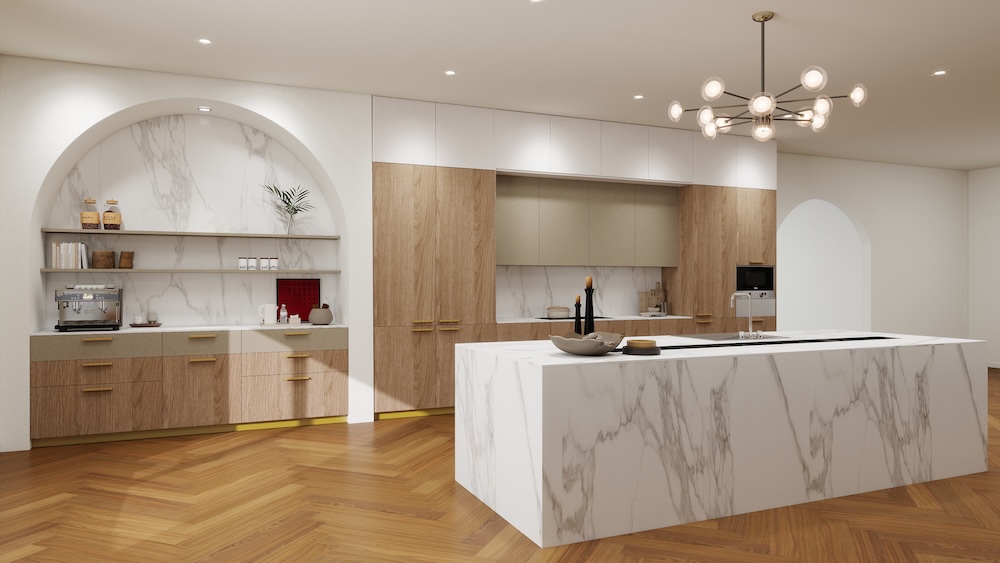
Malaysian kitchen with marble-look quartz island and marble wall panel.

Marble and quartz countertops differ mainly in origin and performance. Marble is a natural stone quarried in blocks and cut into slabs. Its calcium carbonate base makes it naturally soft, porous, and reactive to acids, including citrus juice, vinegar, and sambal.

Quartz is an engineered stone made from 90 to 95 percent natural quartz particles bound with polymer resin and pigments. The result is a non-porous, highly consistent surface that resists staining, scratches, and bacterial growth. It is worth noting that quartz is not artificial. 

It contains more natural mineral content than many stone resin composites and is more accurately described as an engineered stone.

Factor

Marble

Quartz

Better for Malaysian Homes

Notes

Composition

Natural metamorphic rock, mostly calcium carbonate.

90–95% natural quartz particles + resin + pigments.

Quartz

Quartz is engineered. Marble is purely geological.

Porosity

Naturally porous, needs sealing.

Non-porous, no sealing required.

Quartz

High humidity in Malaysia favours non-porous surfaces.

Acid resistance

Low: etches from vinegar, citrus, sambal, etc. 

Moderate to good, but resin degrades with strong acids

Quartz

Marble demands more caution. Quick clean-ups help with quartz.

Scratch resistance (Mohs)

3–4, scratches more easily

6–7, more scratch-resistant

Quartz

Marble is more prone to knife marks and heavy objects.

Heat resistance

Can handle heat, but thermal shock can crack it

Resin discolours above 150°C

Neither

Both require trivets. Marble risks cracking under sudden heat.

Maintenance

Sealing every 6–12 months; wipe spills immediately

Wipe with mild soap, no sealing required

Quartz

Easier to maintain in humid, busy Malaysian kitchens.

Pattern consistency

Unique per slab, no two are alike

Very consistent, repeatable patterns and colours

Quartz

Better for large kitchen runs where uniformity matters.

How do marble and quartz perform in Malaysian kitchens?

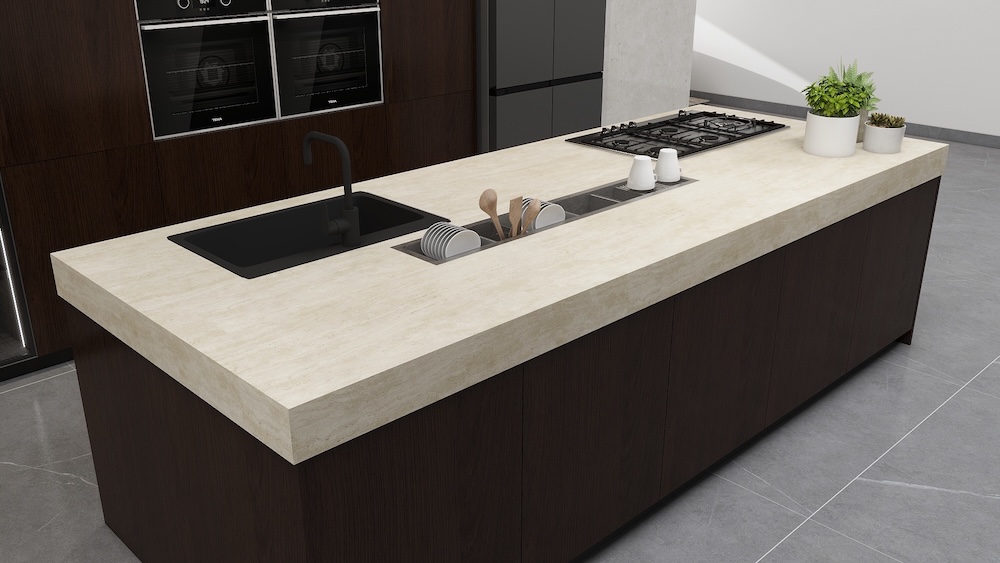
Close-up of kitchen island countertop with integrated sink and gas hob.

Performance is where the real difference between marble and quartz becomes apparent. Malaysian kitchens deal with high heat, acidic ingredients, and persistent humidity, and these conditions test both materials in ways a showroom environment never will.
Durability and scratch resistance

Quartz scores 6 to 7 on the Mohs hardness scale. Marble scores 3 to 4. In a Malaysian kitchen with daily wok cooking, heavy pots, and regular knife use, that gap is significant. Quartz holds its surface over the years of heavy use. Marble shows scratches within weeks

Maintenance in Malaysia's humid and wet kitchen

Marble countertop maintenance is demanding in a humid Malaysian environment. Marble is naturally porous and readily absorbs acidic or pigmented liquids, leaving permanent stains or etch marks.

It needs resealing every 6 to 12 months, and spills must be wiped up immediately. Quartz is non-porous and needs no sealing, making it considerably easier to maintain in a wet kitchen.

If committed to marble, specify a honed finish and limit it to the dry kitchen only.

Aesthetics: Natural veining vs consistent finish

Marble has unique veining, and no two slabs are identical. This suits an organic, nature-inspired style, but can be difficult to match across a large kitchen run.

Quartz has consistent patterns across every slab. This works well for large kitchen layouts and contemporary Malaysian designs where uniformity matters.

Which countertop material suits each Malaysian kitchen zone?

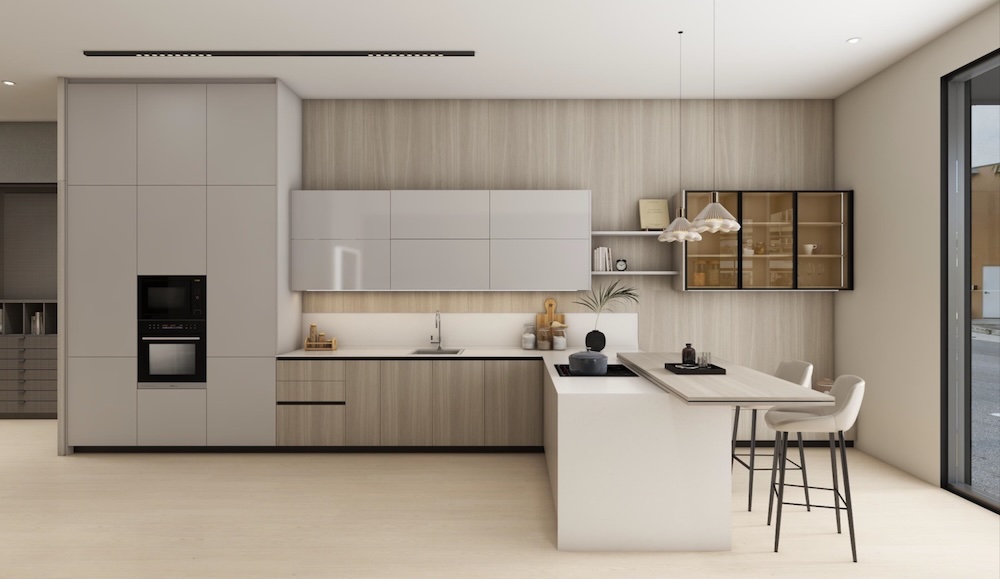
Malaysian dry kitchen showing cooking, sink, and island zones.

The right countertop material depends on the kitchen zone. In Malaysian homes, the wet kitchen, dry kitchen, and bathroom vanity top each have different demands, and the wrong material in the wrong zone produces damage that cannot be reversed.

  • Wet kitchen countertop: Between marble and quartz, quartz is the correct choice. It is non-porous, stain-resistant, and requires no sealing. Marble will stain and etch regardless of sealing frequency, given constant exposure to oil, curry, tamarind, lime juice, and steam.
  • Dry kitchen and island: Both materials work here. This space sees lighter use, and marble is easier to maintain away from the wet kitchen environment.
  • Bathroom vanity top: Either material suits. Splashes are limited to water and soap, and both handle this without issue. Quartz is the lower-maintenance choice as it resists moisture and requires no sealing.

Read: 7 Wet Kitchen Design Ideas for a Stylish & Functional Home.

Watch: Unlocking Luxury: Feng Shui Condo Transformation to see how quartz was specified for a Malaysian condo kitchen renovation.
What is marble look quartz?

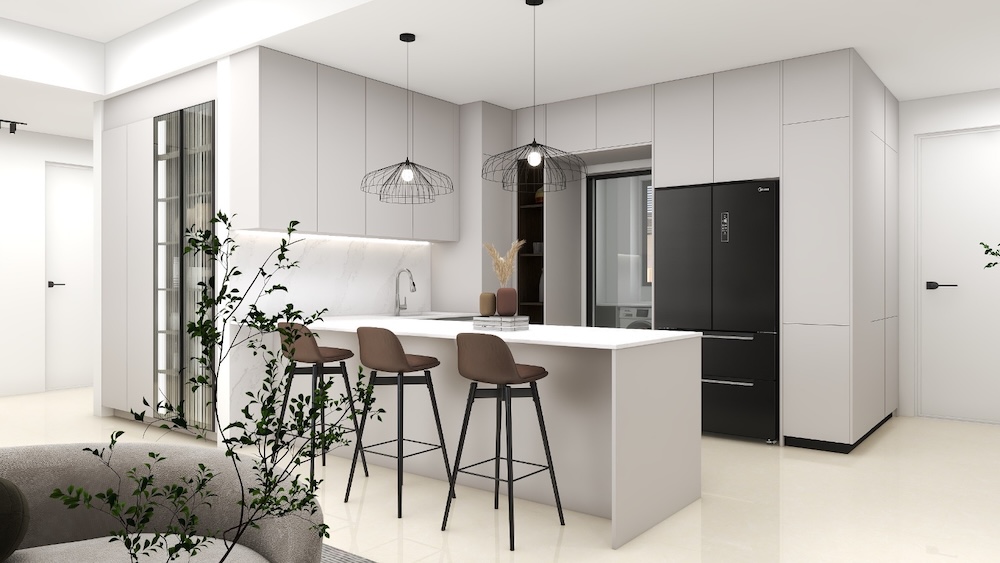
Modern Malaysian dry kitchen with marble-look quartz splashback and white island countertop.

Marble-look quartz is engineered quartz designed to mimic the veining and colour of natural marble, while maintaining the durability and low-maintenance performance of quartz.

Recent manufacturing advances have made marble-effect quartz much more convincing. At conversational distance, its subtle movement, depth, and shading closely resemble high-end Statuario or Calacatta slabs.

In Malaysia, the Signature Quartz Marblo series (Statuario Venato, Bianco Gioia, Victoria, Orix, Diablo) offers this marble-look aesthetic with a 10-year warranty. This makes it a practical upgrade for homeowners seeking a luxury feel without the high maintenance of real marble.

When selecting between real marble and marble-look quartz, always compare both under natural light. Artificial lighting can exaggerate veining contrast and make quartz look more dramatic or less natural than it actually is.

Explore: Signature Quartz — Marblo Collection.

Cost comparison in Malaysia: Quartz vs Marble

Quartz is generally more cost-effective in Malaysia than real marble, in terms of both installation and long-term maintenance.

  • Marble: Higher cost per square foot, varying by origin and slab quality. Annual resealing adds an ongoing maintenance cost that compounds over time.
  • Quartz: More affordable per square foot than marble. Price varies by brand, thickness, and finish.
  • Marble-look quartz: Quartz performance at quartz pricing. A practical middle ground for homeowners who want the marble aesthetic without the maintenance commitment.

Always compare the full installed cost per square foot, not just the material price. Slab cutting, edge profiling, splashback, and site logistics can significantly shift the final cost between quartz and marble in Malaysian projects.

Common kitchen countertop mistakes to avoid

Many Malaysian homeowners make avoidable countertop decisions that affect both appearance and longevity. These are the most common ones to watch for.

  • Specifying marble for the wet kitchen: Marble etches and stains regardless of sealing. It is not a suitable material for a zone with constant exposure to oil, curry, tamarind, and lime juice. Quartz is the correct choice here.
  • Ignoring slab thickness: Always specify a minimum of 20mm at the hob zone. Thinner slabs are more vulnerable to cracking under the heat and stress of wok cooking.
  • Viewing samples under showroom lighting only: Showroom lighting makes every material look its best. Always check countertop samples under natural daylight before confirming the order.
  • Skipping the edge profile decision: Edge profiles must be confirmed before fabrication begins. Changing the profile after cutting usually means re-cutting the slab or accepting mismatched edges.
  • Not sealing marble at installation: If marble is chosen, it must be sealed before first use. This minimises early staining and etching before the surface is exposed to daily kitchen conditions.

Conclusion

Marble and quartz play complementary roles in Malaysian kitchens, but only when specified for the right zone.

Between marble and quartz, quartz is the correct choice for wet kitchens and high-use work surfaces. It is non-porous, requires no sealing, and stands up to the acid and humidity of daily Malaysian cooking, with trivets used for hot cookware. Marble suits dry kitchen islands and bathroom vanity tops where use is lighter and aesthetics are the priority.

For homeowners who want the marble look without the maintenance commitment, marble-look quartz offers a practical middle ground. The Signature Quartz Marblo series delivers the veining and depth of natural marble with quartz performance and a 10-year warranty.

Signature Malaysia’s design team can help you select the right countertop material for each zone. Visit a showroom to see how each finish performs under natural light and alongside your cabinet specification.

Also read: Kitchen Renovation & Design Ideas.

Our Flagship Store is relocating. Temporarily closed in August 2026, reopening September 2026 at