WhatsApp us: 6012-6231866
- Email: customerservice@signature.my
WhatsApp us: 6012-6231866
Key Takeaways
The bathroom is the wettest room in a Malaysian home. Water sits on the floor, humidity never leaves, and the wrong tile turns a wet floor into a slip, a stain, or a patch of mould.
Malaysian bathrooms are often washed down with a hose, which makes the whole floor a wet zone. That changes what the tile has to do. It has to grip barefoot, and it has to be dense enough that water sits on the surface instead of going into the body.
Choosing tiles for bathroom floors and walls comes down to three things. How much water the tile soaks up, how well it grips underfoot when wet, and which part of the bathroom it is going into.
This article covers what to look for, how to choose by zone, design ideas, and the layers beneath the tile that fail first.
Bathroom with large-format floor tiles and a separate glazed shower zone.
The best tiles for a bathroom are porcelain on the floor and in the shower, and glazed ceramic on the walls. Porcelain has a water absorption rate below 0.5 percent, which is what resists the staining and moisture damage that build up in Malaysia’s humid bathrooms.
Water absorption is the one number that decides where a tile can go, and a bathroom floor needs below 0.5 percent.
For the full material comparison, read: Ceramic vs Porcelain: How to Choose What’s Best for Your Home.
The glaze keeps a tile hygienic. Mould starts in the grout line.
Two different properties do two different jobs. Porosity decides where a tile can go. The glaze decides how clean it stays.
Floors and walls have different jobs. Floor tiles lead on grip and low absorption. Wall tiles lead on easy cleaning and design.
| Factor | Bathroom floor | Bathroom wall | Shower and wet zone |
|---|---|---|---|
| Water absorption | Below 0.5% | 3% to 10% | Below 0.5% |
| Finish | Matt or textured | Glazed, glossy or matt | Textured |
| Slip rating | DIN 51097 barefoot class | Not needed | DIN 51097, Class B minimum |
| Where the design goes | Plain, functional finish | Feature tiles and colour | Plain, slip-first finish |
Bathroom floor tiles take standing water that the walls never see, so they need low absorption and a surface that grips when wet.
Bathroom wall tiles face splashes rather than standing water, so a glazed, easy-clean face matters more than what the tile body absorbs.
Shower floors need the most slip-resistant tile in the bathroom, because that is where the floor is wet, soapy, and walked on barefoot.
Two standards measure slip resistance. DIN 51097 tests barefoot on a wet surface, which is how a bathroom is used. DIN 51130 tests in work shoes on an oiled ramp and returns an R rating. It was written for workplaces and walkways, and tile shops apply it to bathrooms because it is what suppliers print.
Tile shops usually quote the R rating. Ask for the barefoot class as well. For a shower floor, ask for Class B as the minimum. Class C grips harder and is used around pools. A high R rating is better than nothing, but it was not measured barefoot.
Master bathroom with a marble-look porcelain feature wall and a dark matt tiled floor.
Good bathroom tiles design works within the hygiene and grip constraints, using tile size, colour, and layout.
A feature wall carries the design, because the wall is dry and the tile can be anything. Marble-look porcelain gives the marble effect at below 0.5 percent absorption.
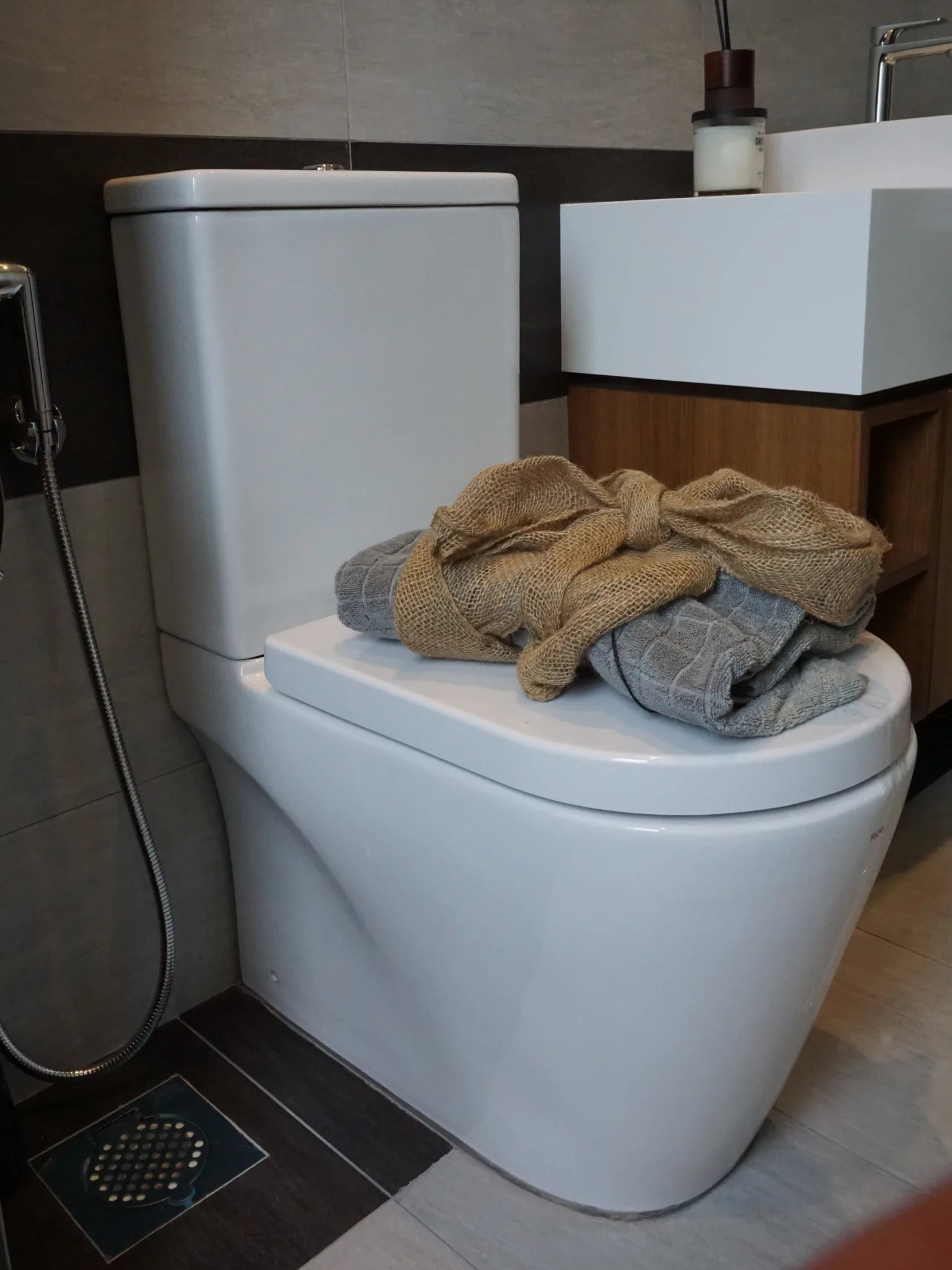
In a small condo bathroom, large-format light-toned toilet tiles make the room feel bigger, because fewer grout lines and a brighter surface reduce visual clutter.
For layout, storage, and colour in a compact bathroom, read: Small Bathroom & Toilet Design Ideas & Inspirations You’ll Love.
Bathroom floor trap set into a dark tiled wet zone, with the floor falling towards it.
The waterproofing membrane and the grout fail long before the tile does.
Confirm the flood test is signed off before the tiler starts. The floor is filled with water and left, to prove the membrane holds.
Most bathroom tile failures come from the wrong absorption rate, the wrong finish, or work done in the wrong order.
Not if they’re glazed. The glaze is what’s sealed, not the tile body, so porosity only becomes a hygiene problem on an unglazed tile in a wet zone, where moisture travels into the body instead of wiping off the surface.
Daily cleaning is just the tile face, a mild detergent and a wipe. The grout is the part that needs upkeep. Reseal cement grout periodically. Epoxy grout does not need it.
On a wall, sometimes. On a bathroom floor, no. The waterproofing membrane sits beneath the old tile. Tiling over it means the membrane is never tested or renewed, and a failed one stays failed under two layers of tile. It also raises the floor while the floor trap stays where it is, so water no longer runs to the drain.
Walls usually go first, with the bottom row left off until the floor is laid. Tiling the walls before the floor keeps adhesive and offcuts off a finished surface, and the bottom row of wall tile then finishes cleanly over the floor edge. The waterproofing and the fall to the trap are completed before either.
Choose a bathroom tile by how much water it absorbs, how well it grips when wet, and which zone it sits in. The floor and the shower need below 0.5 percent absorption. The walls take glazed ceramic, and that is where the design lives. Ask for the DIN 51097 barefoot class by name, because the R rating your tile shop quotes was measured in work shoes.
The tile is the last decision in a bathroom. Settle the waterproofing, the fall to the floor trap, and the zoning at the design stage, then choose the tile to suit each zone.
Signature Malaysia‘s design consultants guide tile and renovation decisions for every room, from material selection to full home interior planning. Speak to the team before your bathroom is tiled.
Limited to 50 slots only!